Disclosure: As an Amazon Associate, we earn from qualifying purchases. This helps support our site at no extra cost to you. All recommendations are based on clinical experience and product research.
Understanding Back Braces: A PT's Perspective
As a physical therapist, I often get asked about back braces. The truth is nuanced: back braces are tools, not solutions. Used correctly, they can provide temporary relief, improve body awareness, and support recovery. Used incorrectly, they can actually weaken your core and prolong your pain.
This guide covers the best back braces available in 2025, when to use them (and when not to), and how to pair them with exercises for lasting relief.
🩺 PT Tip: A back brace should be part of your recovery plan, not a permanent crutch. Most patients benefit from wearing a brace during symptom flares or demanding activities, while progressively building core strength to reduce dependence over time.
Quick Comparison: Our Top Picks
| Product |
Best For |
Rating |
Price Range |
| FEATOL Back Brace |
Overall Best Value |
⭐ 4.5/5 (27K+ reviews) |
$20-25 |
| Sparthos Back Brace |
Most Comfortable |
⭐ 4.4/5 (65K+ reviews) |
$28-35 |
| FREETOO Lumbar Support |
Premium Choice |
⭐ 4.5/5 (5.5K+ reviews) |
$45-50 |
| Mueller 255 Lumbar Support |
Trusted Brand |
⭐ 4.3/5 (4K+ reviews) |
$15-22 |
| AVESTON Back Brace |
Rigid Support |
⭐ 4.4/5 (13K+ reviews) |
$24-28 |
★★★★½
4.5/5 (27,400+ ratings) • Best Seller in Back Support Belts
Key Features:
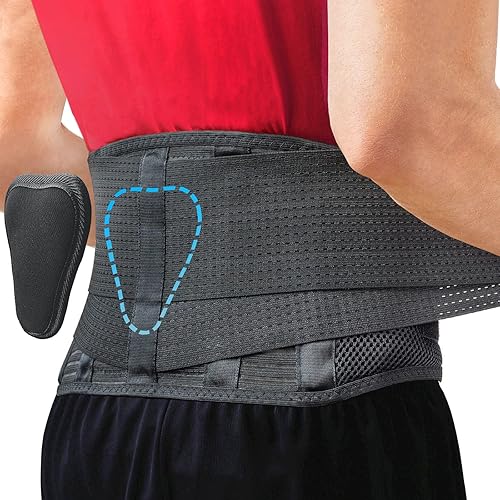
- Removable lumbar pad for customizable support
- Dual adjustable straps for secure fit
- Breathable mesh construction
- Available in 6 sizes (XS to 3XL)
- FSA/HSA eligible
- Safer chemicals certified
PT Insight: The FEATOL hits the sweet spot between support and comfort. The removable lumbar pad is excellent—I recommend starting with it in place, then removing it as your pain decreases to gradually reduce dependence on external support.
Best for: General lower back pain, sciatica, herniated disc recovery, scoliosis management
Check Price on Amazon →
★★★★½
4.4/5 (65,400+ ratings) • Best Seller in Lumbar Supports
Key Features:
- Breathable, lightweight design
- Built-in lumbar support pad
- Vertical support stays for stability
- 7 size options for precise fit
- Low-profile design fits under clothing
- Safer chemicals certified
PT Insight: With over 65,000 reviews, the Sparthos is the most-reviewed back brace on Amazon for good reason. Its low-profile design makes it ideal for patients who need support at work without it being obvious. The breathability is excellent for all-day wear.
Best for: Office workers, extended wear, those wanting a discreet option
Check Price on Amazon →
★★★★½
4.5/5 (5,500+ ratings)
Key Features:
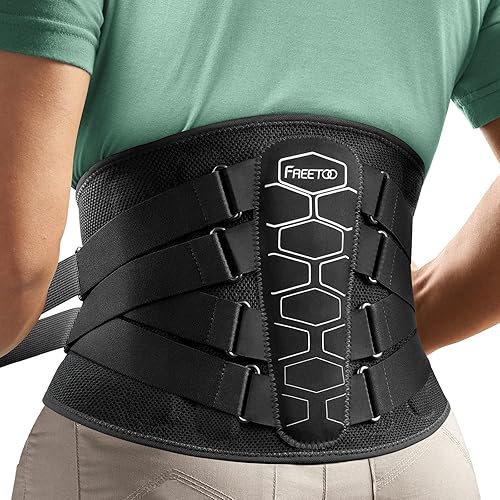
- Innovative pulley system for adjustable compression
- Ergonomic 3D knit construction
- Soft, breathable materials
- Built-in lumbar pad
- Premium build quality
- Available in 5 sizes
PT Insight: The pulley system on this brace is a standout feature. It allows you to fine-tune compression levels without re-adjusting the entire brace—perfect for patients whose symptoms fluctuate throughout the day. Worth the higher price for those who need variable support.
Best for: Variable pain levels, those wanting premium quality, herniated disc management
Check Price on Amazon →
★★★★
4.3/5 (4,000+ ratings)
Key Features:
- Mueller Sports Medicine quality
- Double-layer design for support
- Adjustable compression
- Comfortable padding
- Trusted medical brand since 1959
- One size fits most
PT Insight: Mueller has been a trusted name in sports medicine and rehabilitation for decades. While not as feature-rich as some newer options, it's a reliable choice backed by a company that understands therapeutic support. Great entry-level option.
Best for: Those who prefer established medical brands, basic lumbar support needs
Check Price on Amazon →
★★★★½
4.4/5 (13,000+ ratings)
Key Features:
- 6 rigid support ribs for maximum stability
- Thin, breathable design
- Keeps spine straight and aligned
- Adjustable compression
- Available in 3 sizes
- Suitable for work and sports
PT Insight: The 6 rigid support ribs in this brace provide more structural support than most consumer braces—approaching what you'd get from a medical-grade LSO (lumbar-sacral orthosis). Use this when you need firm support, but transition to a softer brace as you improve.
Best for: Heavy lifting, acute injury recovery, those needing firmer support
Check Price on Amazon →
When Back Braces Help (And When They Don't)
Understanding when to use a back brace is crucial. Here's my clinical guidance based on years of treating back pain patients:
✅ Good Uses for Back Braces
- Acute flare-ups: Short-term use (1-2 weeks) during pain episodes
- Physical labor: Protection during lifting, bending, or prolonged standing
- Post-surgery recovery: As directed by your surgeon
- Herniated disc symptoms: During acute phase while pursuing treatment
- Travel: Long flights or car rides
- Proprioceptive feedback: Reminding you to maintain good posture
⚠️ Use With Caution
- Chronic daily use: Can lead to core muscle weakening
- As a sole treatment: Should be combined with exercises
- Sleeping: Generally not recommended unless MD-directed
- Avoiding movement: Movement is medicine—don't over-restrict
- Undiagnosed severe pain: See a professional first
⚠️ Important: If you experience any of the following, seek medical attention before using a back brace: numbness in the groin area, loss of bladder/bowel control, severe weakness in both legs, or pain following major trauma. These may indicate serious conditions requiring immediate evaluation.
Core Strengthening: The Real Solution
Here's what I tell every patient: the goal is to become your own back brace. Your deep core muscles—particularly the transverse abdominis and multifidus—are designed to stabilize your spine. A brace can help while you strengthen these muscles, but it can't replace them.
Essential Exercises to Pair with Your Brace
🎯 Dead Bug
Lie on your back, arms up, knees bent 90°. Slowly extend opposite arm/leg while keeping your back flat. 10 reps each side, 3 sets.
🎯 Bird Dog
On hands and knees, extend opposite arm/leg while keeping spine neutral. Hold 5 seconds, 10 reps each side.
🎯 McGill Curl-Up
Lie on back, one knee bent, hands under lower back. Lift head and shoulders slightly, hold 8 seconds. 5 reps, 3 sets.
🎯 Glute Bridge
Lie on back, knees bent, feet flat. Squeeze glutes to lift hips, keeping back straight. Hold 5 seconds, 15 reps.
🩺 Progressive Protocol: Week 1-2: Use brace during activities + do exercises daily. Week 3-4: Reduce brace use by 25% + continue exercises. Week 5+: Use brace only for demanding activities while maintaining exercise routine.
Frequently Asked Questions
How many hours a day should I wear a back brace?
For most people, 2-4 hours during symptom-provoking activities is ideal. Avoid wearing a brace all day every day, as this can lead to muscle weakening. Use it strategically—during work, exercise, or flare-ups—then remove it to allow your muscles to work.
Will wearing a back brace weaken my muscles?
It can, if overused. Research shows that prolonged daily brace use can reduce core muscle activation over time. However, strategic short-term use combined with exercise does not cause significant weakening. The key is using the brace as a tool, not a crutch.
What's the difference between a lumbar support and an LSO brace?
A lumbar support is a softer, more flexible brace providing moderate compression and proprioceptive feedback. An LSO (lumbar-sacral orthosis) is a more rigid brace, often prescribed after surgery or for conditions like spondylolisthesis. The products reviewed here are lumbar supports—if you need an LSO, consult your doctor.
Can I exercise while wearing a back brace?
Yes, for certain activities. Back braces can be helpful during weight lifting, walking, or light activity. However, I recommend removing the brace for core-specific exercises (like those listed above) so your stabilizing muscles learn to work independently.
How do I choose the right size?
Measure your waist at belly button level, not your pants size. Most braces have detailed size charts—follow them carefully. A brace that's too loose won't provide support; too tight will be uncomfortable and restrict breathing. When in doubt, size up and use the straps to adjust.
Are back braces covered by insurance or FSA/HSA?
Many back braces are FSA/HSA eligible (check the product listing). Insurance coverage varies—prescribed medical-grade braces are more likely to be covered than over-the-counter options. The FEATOL brace, for example, is FSA/HSA eligible.
Final Thoughts
A quality back brace can be a valuable part of your recovery toolkit. My top recommendation for most people is the FEATOL Back Brace—it offers the best combination of support, comfort, and value. For those wanting maximum comfort and all-day wear, the Sparthos is excellent. And if you need premium features with adjustable compression, invest in the FREETOO.
Remember: the brace is a bridge, not a destination. Use it to manage symptoms while you address the root cause through movement, strengthening, and (if needed) professional treatment. Your spine has remarkable healing capacity—give it the support it needs, but don't underestimate its strength.
🩺 When to See a Professional: If your back pain persists beyond 6 weeks, radiates down your leg past the knee, is accompanied by weakness or numbness, or significantly impacts your quality of life—please see a physical therapist or physician. A proper evaluation can identify issues a brace alone can't fix.